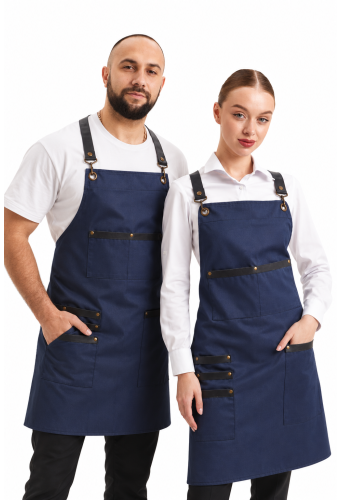
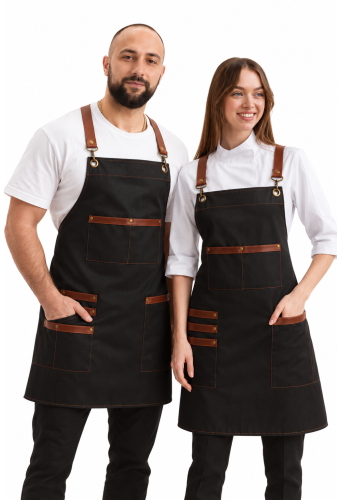
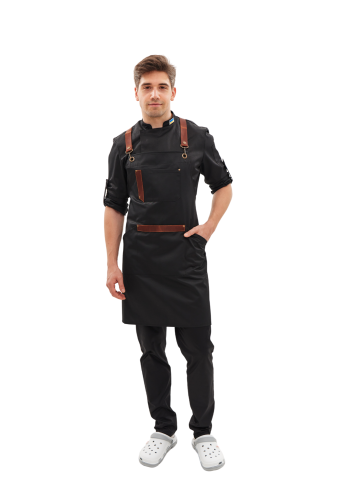
Which chef apron is better for intensive kitchen work — a long or short one?
▼
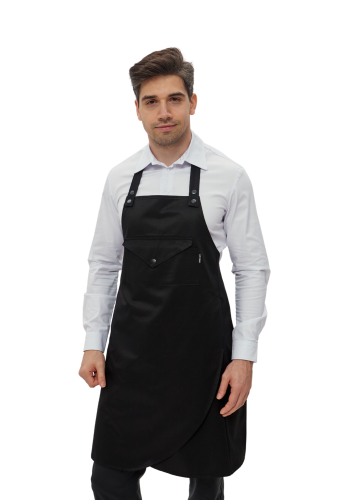
The choice depends on the employee's tasks and the type of kitchen. If a chef moves around a lot, frequently works on the line, interacts with equipment, and stays active throughout the shift, an apron that is too long may get in the way. In these cases, a short chef apron is more convenient because it does not restrict movement or create unnecessary discomfort. If maximum protection from stains is important, a bib apron is usually a better choice because it covers more of the uniform and is well suited for hot kitchen areas or work involving ingredients that can cause heavy staining.
How is a professional chef apron different from a regular kitchen apron?
▼
A professional chef apron is designed for daily commercial use rather than occasional home cooking. It should be made from denser, more durable fabric, withstand regular washing, maintain its shape, and resist seam damage. In addition, chef aprons are designed with fit, tie comfort, length, and the balance between protection and mobility in mind. A regular kitchen apron may look similar, but under professional working conditions it can quickly lose both its appearance and functionality.
When is a bib apron really necessary, and when can a chef work without one?
▼
A bib apron is especially useful when there is a high risk of staining the upper part of the uniform, such as when working with sauces, meat, dough, pastry mixtures, frying, or intensive food preparation. It provides more complete protection and helps keep workwear looking neat for longer. If a chef performs a more limited range of tasks or works in an environment where freedom of movement and lightweight clothing are more important, a more compact apron may be enough. That is why a chef apron should be selected based on how the employee actually works throughout the shift, not just on appearance.
How practical is a black chef apron for everyday use?
▼
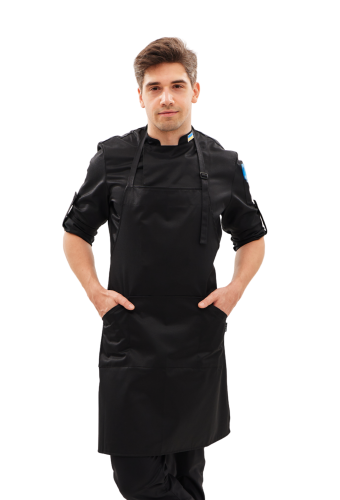
A black chef apron is considered one of the most practical options for a professional kitchen, especially when maintaining a neat appearance throughout the shift is important. Minor signs of use are less noticeable on black fabric, it tends to look presentable for longer, and it fits well into modern restaurant and open-kitchen concepts. However, even the most practical color cannot compensate for poor fabric or low-quality construction. That is why, when you buy a chef apron, you should consider not only the color but also the quality of the material, fabric weight, and overall durability.
Which apron design features actually affect a chef's comfort at work?
▼
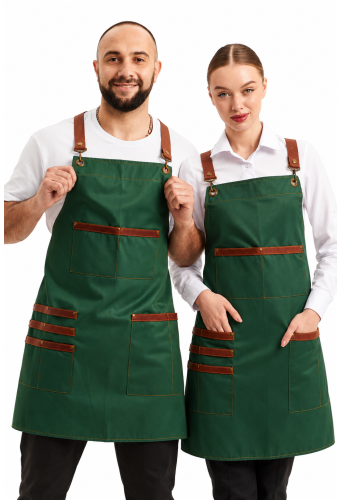
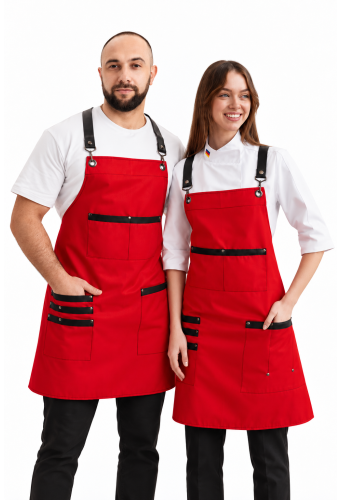
In practice, the details make a big difference: the width of the ties, weight distribution, apron length, fit, and how the garment behaves during movement. If an apron constantly twists, puts pressure on the neck, slips out of place, or makes bending difficult, the employee will quickly stop seeing it as a comfortable part of the uniform. A good chef apron should stay securely in place, not distract from work, and avoid creating unnecessary strain during a long shift. This is why high-quality HoReCa aprons stand out not only because of their appearance, but also because of their well-designed construction.
When does it make sense to order a kitchen apron with a logo?
▼
An apron with a logo makes sense when the uniform is part of the establishment's brand identity and staff interact with guests or work in an open kitchen. This is especially relevant for restaurants with a strong concept, gastropubs, bakeries, cafes, and other businesses where visual presentation plays an important role. However, the logo should be neat and appropriately positioned: branding that is too large or poorly placed can make the uniform look less professional. That is why LuxForm aprons or other professional branded models are best used as part of the overall visual style rather than simply as a surface for printing a logo.
How can you tell whether chef aprons are suitable for the entire team rather than just looking good in photos?
▼
Before purchasing, it is important to evaluate aprons not only visually but also in real working conditions. Good chef aprons should be comfortable for employees of different heights and body types, allow unrestricted movement, be easy to adjust, and withstand intensive use. If a model looks good in photos but is uncomfortable in practice, staff will constantly adjust it or be reluctant to wear it. That is why, before buying chef aprons for a team, it is better to check not only the design but also the practicality, fit, and how the garment performs throughout an entire shift.