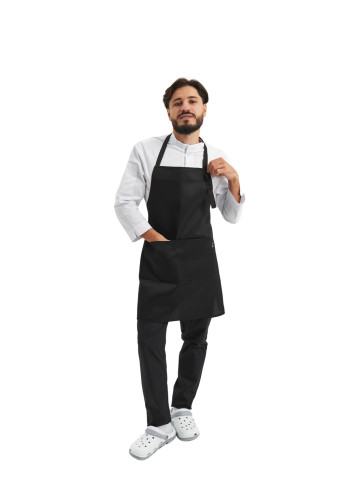
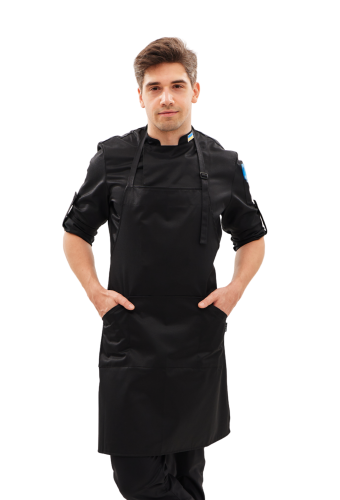
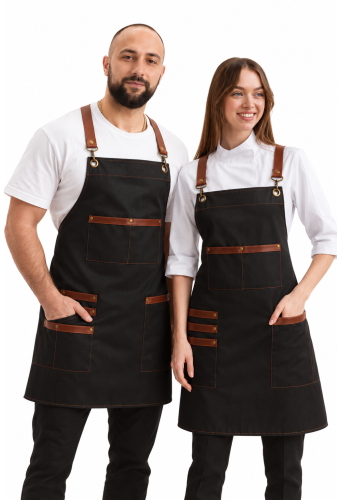
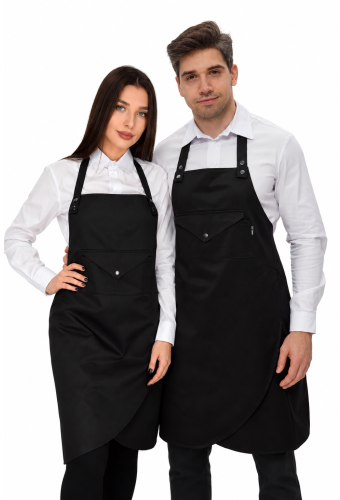
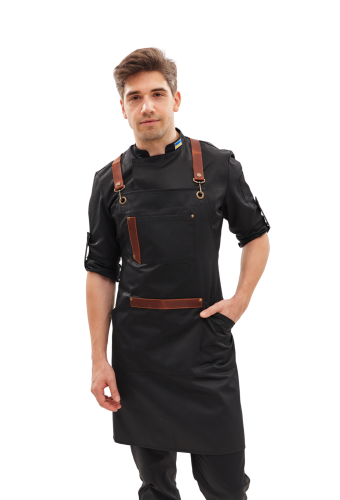
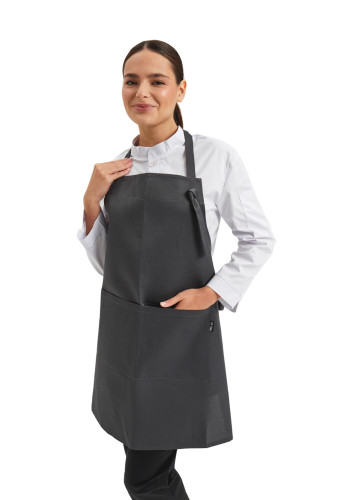
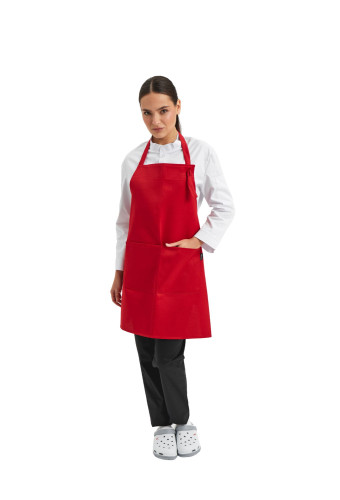
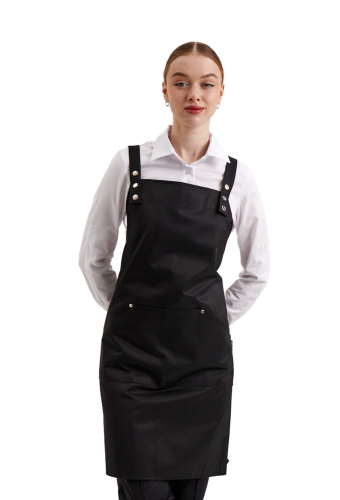
What is the advantage of a bib apron compared with classic models?
▼
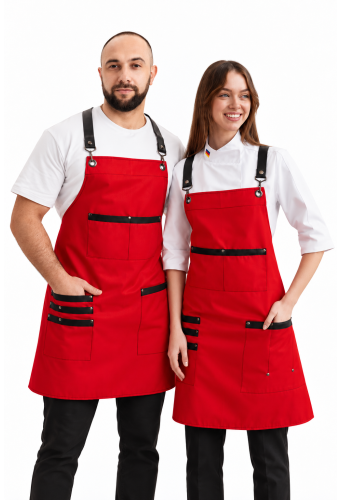
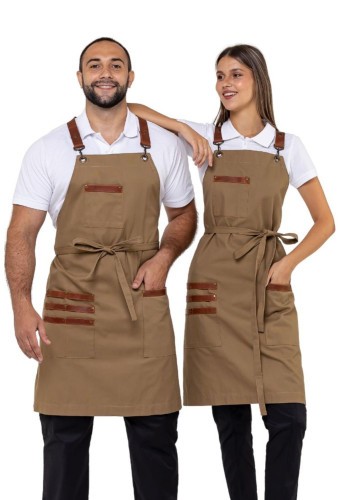
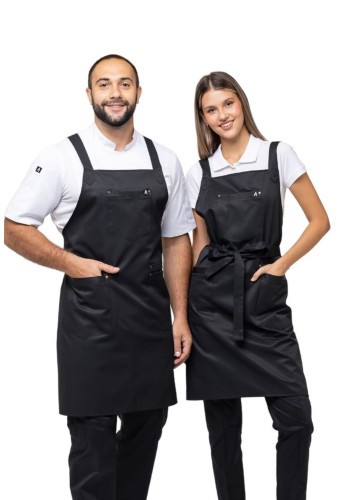
A bib apron offers a higher level of protection for clothing because it covers the chest and stomach. This is especially important in the kitchen and behind the bar, where there is a risk of stains. Unlike short models, these HoReCa aprons are suitable for intensive work and help the uniform keep its appearance better.
Which fabrics are best for professional aprons?
▼
Professional aprons are most often made from blended fabrics: cotton + polyester. They resist stains, wash more easily and hold their shape longer. In the kitchen, fabric density matters most, while for front-of-house staff it’s about the balance between durability and appearance.
How does a chef’s bib apron differ from a waiter’s apron?
▼
A chef’s bib apron is usually denser and more resistant to high temperatures and stains. A waiter’s bib apron tends to have a lighter cut and a neat appearance, and may feature decorative elements, since it plays a role in how guests perceive the venue.
How do you choose the right size and fit for a bib apron?
▼
It’s important to consider adjustable elements — neck straps and waist ties. A bib apron should sit securely without restricting movement. One-size models suit most employees, but for maximum comfort it’s better to choose versions with adjustable length.
Can I order an apron with a logo for a restaurant or café?
▼
Yes, an apron with a logo is a standard branding solution. Such aprons for restaurants and cafés help emphasise the venue’s style and make staff more recognisable. At the same time, it’s important to choose high-quality printing that withstands frequent washing.
How many bib aprons does one employee need?
▼
The optimal number is 2–3 aprons per person. One is in use, the second is in the wash, and the third is a spare. This is especially important for high-traffic venues, where HoReCa aprons get dirty quickly.
What should you consider when choosing a bib apron to match your venue’s concept?
▼
It’s important to consider the interior style, the type of venue and the brand’s positioning. For example, denser and more stylish models suit gastrobars, while lightweight and minimalist ones work for coffee shops. A LuxForm bib apron can be adapted to your brand colours and business needs while keeping the balance between practicality and appearance.